Smart factory IoT solutions connect machines, sensors, and business systems so manufacturers can see and act on production data in real time. Most plants already generate the data they need. The problem is that it sits in machines, spreadsheets, and systems that do not talk to each other.
Problems surface a shift late. Pilots stall before they scale. The engineers who can bridge operational technology (OT) and software are hard to hire.
This guide covers how smart factory IoT solutions work, which use cases pay back first, what they really cost, and how to build them without betting the plant.
Key takeaways
- Smart factory IoT solutions link sensors, machines, and MES/ERP so teams act on live data instead of end-of-shift reports.
- The best first use case is tied to one costly, measurable problem, usually downtime, energy, or quality.
- Most failures are organizational and architectural (legacy integration, data silos, security, unclear ownership), not sensor problems.
- Budget for total cost of ownership: integration, device management, security, and maintenance, not just hardware.
- A hybrid approach, meaning a proven foundation customized by a dedicated team, often balances speed, fit, and lock-in risk.
What Are Smart Factory IoT Solutions?
Direct answer: Smart factory IoT solutions are systems of connected sensors, machines, gateways, and software that collect real-time production data and link it to business systems such as MES and ERP. They let manufacturers monitor equipment, energy, quality, and safety continuously, then act on that data through alerts, dashboards, automation, and AI models.
The value is not the sensor. It is the link between what happens on the shop floor and the decisions made in planning, maintenance, finance, and operations.
Industrial IoT (IIoT) in manufacturing explained
Industrial IoT (IIoT) in manufacturing is the use of connected devices and software to capture and act on data from industrial assets and processes. Smart factory IoT solutions are IIoT applied to a production site.
A typical solution has five building blocks:
- Sensors and devices: vibration, temperature, current, pressure, energy meters, cameras, RFID readers.
- Connectivity: industrial protocols and gateways that move data off the machine.
- Edge computing: local processing for time-critical signals.
- Data platform: cloud or on-premise storage and analytics.
- Applications: dashboards, alerts, reports, and integrations with MES, ERP, and maintenance systems.
IoT vs IIoT: what is the difference for a smart factory?
Consumer IoT tolerates delay and occasional failure. A smart factory does not. That difference changes how the system is designed, tested, and secured.
| Dimension | Consumer IoT | Industrial IoT (IIoT) |
| Environment | Homes, offices, public spaces | Factories, plants, warehouses, industrial parks |
| Latency tolerance | Delay is acceptable | Delay can stop a line or miss a fault |
| Failure impact | Inconvenience | Downtime, safety incidents, financial loss |
| Protocols | Wi-Fi, Bluetooth, Zigbee | Industrial Ethernet, Modbus, OPC UA, private cellular, LPWAN |
| Lifecycle | Short, often replaced | Long, equipment runs for decades |
| Security standards | Consumer certifications | Industrial frameworks such as IEC 62443 and NIST CSF |
Smart factory IoT vs traditional factory automation
Automation executes a fixed task the same way every time. A PLC runs its program whether the bearing is healthy or failing.
Smart factory IoT solutions add a data layer on top. They show the condition behind each task, compare it across machines and shifts, and trigger action when something drifts. Automation does the work; IoT tells you how well it is being done.
How Do Smart Factory IoT Solutions Work?
Direct answer: Smart factory IoT solutions work in layers. Sensors and devices capture machine and environmental data; gateways and industrial protocols move it; edge computing processes time-critical signals on site; cloud or on-premise platforms store and analyze it; and applications turn it into dashboards, alerts, and automated actions. Security spans every layer.
Smart factory IoT architecture: the five layers
Each layer can be upgraded or replaced on its own. Designing it that way is what keeps a smart factory IoT solution from becoming a monolith you cannot change.
| Layer | What it does | Typical technology |
| 1. Devices and sensors | Capture raw data from assets, energy meters, cameras, and people | Vibration and temperature sensors, smart meters, IP cameras, RFID/BLE tags |
| 2. Connectivity | Move data reliably from the floor to processing | Modbus, OPC UA, PROFINET, MQTT, Wi-Fi, LoRaWAN, private 5G, industrial gateways |
| 3. Edge computing | Process time-critical data locally and keep running during outages | Industrial PCs, edge gateways, on-site AI inference |
| 4. Data platform | Store, normalize, and analyze data across lines and sites | AWS IoT, Azure IoT, time-series databases, on-premise servers |
| 5. Applications | Turn data into decisions and actions | Dashboards, alerts, reports, AI models, MES/ERP/CMMS integrations |
| Security (all layers) | Protect devices, networks, and data | Network segmentation, encryption, access control, patching, monitoring |
[Image: architecture diagram. Alt text: “Smart factory IoT solutions architecture from sensors to edge, cloud, and MES/ERP”]
Edge computing vs cloud in smart factory IoT
Use the edge when a decision must happen in milliseconds, when bandwidth is expensive, or when data must stay on site. Quality inspection with cameras and safety shutdowns are classic edge workloads.
Use the cloud for cross-site comparison, long-term storage, heavy analytics, and model training. Most smart factory IoT solutions end up hybrid: fast loops at the edge, learning loops in the cloud.
Data residency can decide this for you. Factories in Vietnam, for example, should check local personal data rules before sending camera footage offshore. [Verify: current status of Vietnam’s Decree 13/2023 and the Personal Data Protection Law]
Integrating IoT data with MES, ERP, and SCADA
More sensors do not create more insight on their own. Manufacturing data already lives in MES, ERP, SCADA, CMMS, and quality systems that were never designed to share it.
A useful smart factory IoT solution adds a shared data layer. It gives assets, lines, and fault codes consistent names, synchronizes timestamps, and pushes events into the systems people already use. An alert that opens a maintenance work order automatically is worth more than a dashboard nobody checks.
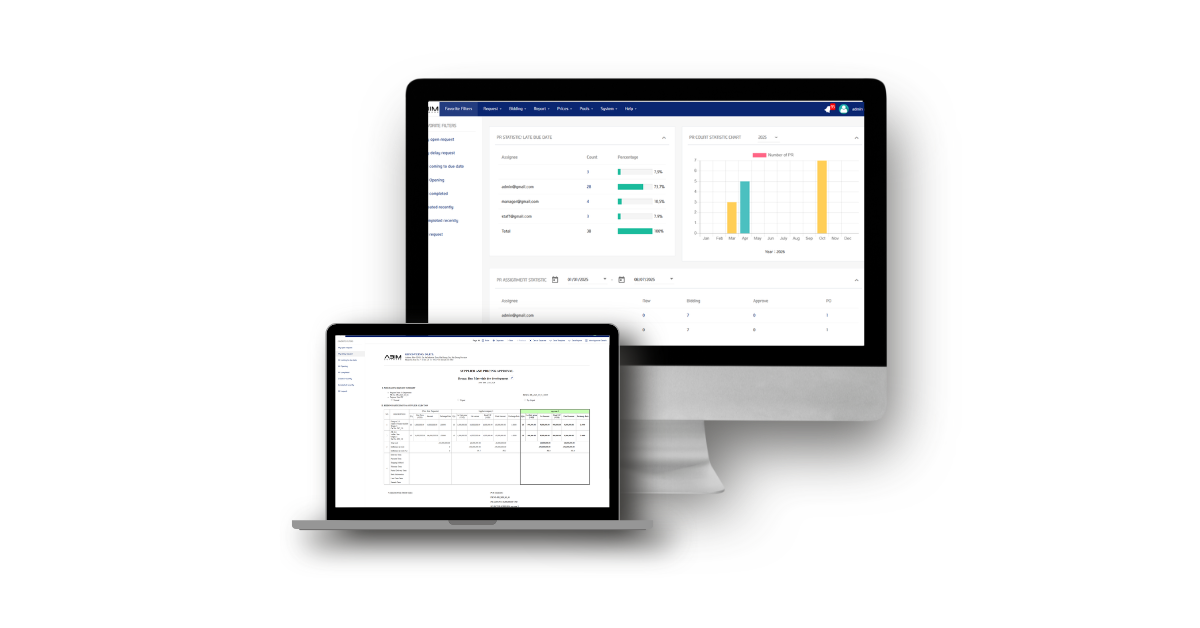
ERP integration is a core competency to test in any partner. ABIM, for example, has integrated enterprise workflows with SAP in its e-bidding work for Hyundai Kefico. [ABIM: confirm IoT-to-ERP or IoT-to-MES integration examples to cite here]
What Are the Top Smart Factory IoT Use Cases?
Direct answer: The highest-value smart factory IoT use cases are predictive maintenance, energy monitoring, inline quality inspection with computer vision, real-time OEE dashboards, worker and site safety, and asset or inventory tracking. The best first use case is the one tied to a measurable, costly problem in your plant, not the most advanced technology.
| Use case | Problem it solves | Data needed | First KPI to track | Complexity |
| Predictive maintenance | Unplanned downtime, reactive repairs | Vibration, temperature, current, run hours | Unplanned downtime hours per month | Medium |
| Energy monitoring | Rising energy bills, manual meter reading, ESG reporting | Meter and sub-meter readings | Energy per unit produced | Low to medium |
| AI vision quality inspection | Defects found too late, manual inspection cost | Camera images, process parameters | Scrap and rework rate | Medium to high |
| OEE dashboards | No live view of availability, performance, quality | Machine states, cycle counts, reject counts | OEE by line and shift | Low to medium |
| Worker and site safety | PPE violations, intrusion, fire and smoke risk | Camera feeds, environmental sensors | Incidents and near misses | Medium |
| Asset and inventory tracking | Lost tools, stockouts, excess stock | RFID, BLE, QR scans | Search time, stock accuracy | Low to medium |
Predictive maintenance IoT
Sensors on motors, pumps, compressors, and bearings flag abnormal patterns before a failure. Maintenance shifts from the calendar to the actual condition of the machine.
The U.S. Department of Energy’s Operations and Maintenance Best Practices guide reports that predictive maintenance programs typically cut maintenance costs by 25% to 30%, breakdowns by 70% to 75%, and downtime by 35% to 45%. Treat these as program-level benchmarks, not a promise for one line.
The stakes are high. Siemens’ True Cost of Downtime 2024 estimates unplanned downtime costs the world’s 500 largest companies about $1.4 trillion a year, roughly 11% of revenue.
IoT energy monitoring for factories and industrial parks
Energy monitoring is often the fastest win. The data is simple, the savings are visible on the next bill, and the same data supports ESG reporting.
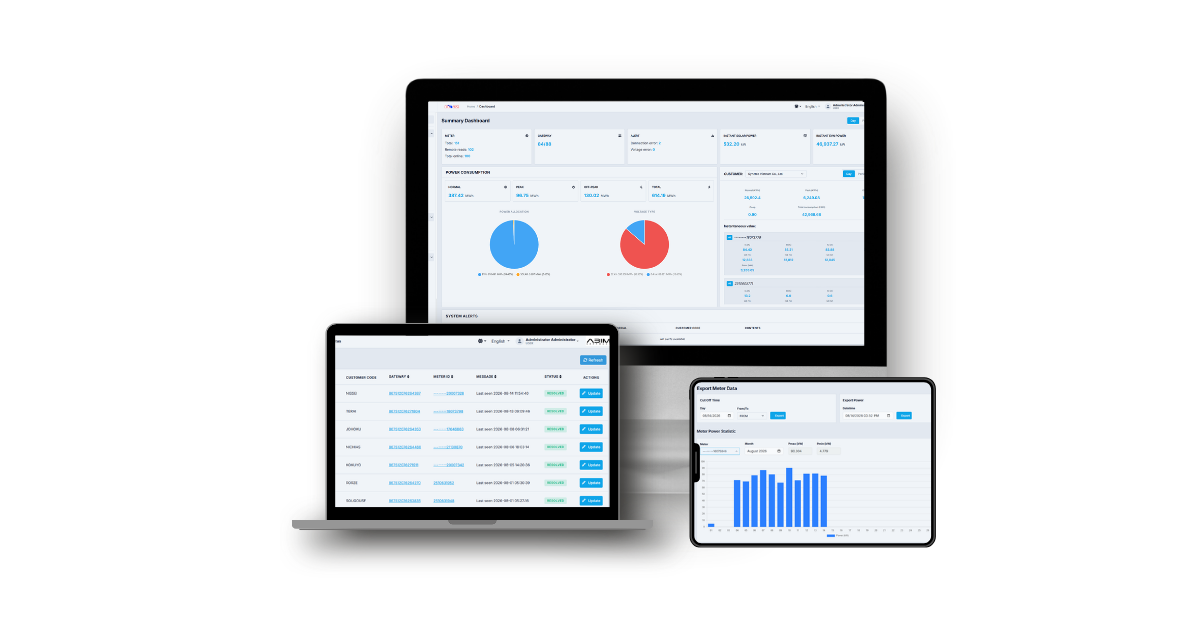
Industrial parks add a twist that most guides ignore: many tenants, many meters, and a billing workflow. Remote meter reading replaces site walks, removes safety risk in bad weather, and gives every tenant a transparent view of their own consumption.
ABIM’s NHIZ case study is an example. The project digitized more than 100 meters and automated real-time energy tracking for over 30 industrial clients through one web portal. [ABIM: confirm client permission to name NHIZ and add verified results] ABIM packages this capability as its Industrial IoT Energy Management solution.
AI computer vision for quality inspection and site safety
Cameras plus edge AI catch defects inline, at production speed, instead of at final inspection. The World Economic Forum’s Global Lighthouse Network 2025 reports that GE HealthCare’s Beijing plant cut scrap by 66% with AI-based vision inspection.
The same camera infrastructure can watch for PPE compliance, perimeter intrusion, smoke, and fire. ABIM deployed this at an auto-parts plant across 20+ outdoor cameras for 24/7 monitoring. [ABIM: confirm detection accuracy figure and client naming] See ABIM’s AI Camera solution for the capability.
Real-time OEE dashboards and asset tracking in a smart factory
OEE (overall equipment effectiveness) combines availability, performance, and quality. Smart factory IoT solutions calculate it automatically from machine states and counts, so supervisors see losses during the shift, not the next morning.
Asset tracking uses RFID or BLE tags on tools, jigs, and inventory. It cuts search time, prevents stockouts, and makes traceability audits far easier.
What Are the Benefits of Smart Factory IoT Solutions?
Smart factory IoT solutions reduce unplanned downtime, lower maintenance and energy costs, improve product quality, and give managers real-time visibility across lines and sites. Their biggest long-term benefit is a trusted data foundation that makes later investments, such as AI models and digital twins, faster and cheaper to deploy.
Operational benefits of smart factory IoT: downtime, quality, energy
- Less unplanned downtime. Condition data warns maintenance teams before a failure stops the line.
- Lower maintenance cost. Work is done when needed, not on a fixed calendar that replaces healthy parts.
- Better quality. Inline sensing and vision catch drift early, so fewer defects reach the end of the line.
- Lower energy use. Machine-level metering exposes idle consumption, leaks, and peak-demand waste.
- Faster decisions. Supervisors see losses during the shift instead of reading a report the next day.
Deloitte’s 2025 Smart Manufacturing Survey found respondents reporting 10% to 20% improvements in production output from smart manufacturing initiatives. The same survey found only 46% of manufacturers were using IIoT at the facility or network level, so the gap between leaders and laggards is still wide.
Strategic benefits of smart factory IoT: a data foundation for AI
AI models are only as good as the data behind them. Smart factory IoT solutions produce clean, timestamped, contextualized data that AI teams can actually train on.
That is why IoT is usually the first step, not the last. Once the data layer exists, digital twins, prescriptive maintenance, and AI-driven scheduling become projects of weeks or months, not multi-year programs.
Benefits of smart factory IoT by stakeholder
| Stakeholder | What they gain |
| Plant manager | Live OEE, fewer surprises, clear loss reasons by line and shift |
| Maintenance lead | Condition-based work orders, fewer emergency call-outs |
| Finance | Energy and scrap costs traced to lines and products; a measurable payback |
| ESG and compliance | Auditable energy, emissions, and water data at machine level |
| Technology leadership | One data platform instead of point tools, ready for AI use cases |
What Are the Challenges of Smart Factory IoT and How Do You Solve Them?
Direct answer: The main challenges are integrating legacy machines and protocols, securing operational technology networks, breaking down data silos between MES, ERP, and SCADA, finding engineers with combined OT and software skills, and scaling beyond a pilot. Most are organizational and architectural rather than technical, and each can be reduced with a phased, well-scoped approach.
Legacy machine IoT retrofit in brownfield plants
Most factories are brownfield sites. They run machines from different decades, vendors, and protocols.
Why it happens: Older equipment was never designed to share data. Documentation is often missing, and machine builders may restrict data access through licenses or warranty terms.
How to solve it: Start with an asset audit and rank machines by criticality. Use non-invasive sensors (clamp-on current, external vibration, add-on meters) and protocol gateways, and collect data read-only so production is never disturbed. For new equipment, write data access rights into the purchase contract.
OT cybersecurity for smart factory IoT
Every connected device is a potential entry point into the production network.
Why it happens: OT networks used to be isolated. Connecting them to IT and the cloud exposes equipment that was never hardened for that. Deloitte’s 2025 survey reports that 91% of surveyed manufacturers experienced at least one cybersecurity breach in the past year.
How to solve it: Segment IT and OT networks with a demilitarized zone between them. Encrypt device traffic, enforce access control and multi-factor authentication, and patch firmware on a schedule. Use the NIST Cybersecurity Framework and IEC 62443 as the baseline. [Verify: add link to the official ISA/IEC 62443 page]
Data silos and interoperability in smart factory IoT
Why it happens: MES, ERP, SCADA, CMMS, and quality systems each hold part of the picture, in different formats and naming schemes.
How to solve it: Define a common data model early: how an asset, a line, and a fault code are named everywhere. Synchronize time across sensors, PLCs, and MES. Integrate through APIs or middleware so events flow into existing tools.
Skills gaps in smart factory IoT development
Why it happens: A smart factory IoT solution needs embedded, networking, data, cloud, application, and QA skills at once. Deloitte reports 69% to 72% of manufacturers face moderate to significant difficulty hiring for IT, OT, data science, and cybersecurity roles.
How to solve it: Keep a small in-house core that owns the architecture and the business outcome. Add a dedicated external engineering team for build and scale, with documentation and knowledge transfer written into the contract.
Pilot purgatory: scaling smart factory IoT
Why it happens: Pilots often start without a baseline, owner, or exit criteria. They look promising, but no one can prove the result, so the budget for rollout never arrives.
How to solve it: Measure the baseline before installing anything. Name an OT owner, an IT owner, and a business owner. Agree in advance what result triggers a funded rollout and what result stops the project. Choose a platform that supports multi-site and multi-protocol deployment from day one.
Should You Buy an IoT Platform, Build Custom, or Go Hybrid?
Direct answer: Buy an off-the-shelf IoT platform when your use case is standard and speed matters. Build custom when your workflows, legacy equipment, integrations, or data residency needs do not fit packaged software. Many manufacturers choose a hybrid: a proven platform or solution foundation, customized and integrated by a dedicated engineering team.
When an off-the-shelf smart factory IoT platform fits (and when it doesn’t)
A packaged platform gets you running fast when your machines are modern and your use case is common, such as OEE for CNC machines.
The risks show up later: per-device licensing that grows with every sensor, features you cannot change, and dependence on the vendor’s roadmap. Managed IoT services also change more often than most enterprise software. Siemens renamed MindSphere to Insights Hub, and Google retired Cloud IoT Core in August 2023, forcing its customers to migrate. [Verify: link to Google’s Cloud IoT Core retirement notice and Siemens’ Insights Hub announcement]
When custom IoT development makes sense
Custom IoT development fits when the solution must follow your process, not the other way around. Typical triggers:
- Mixed legacy equipment with protocols the platform does not support.
- Multi-tenant scenarios, such as industrial parks billing many customers from one meter network.
- Deep integration with ERP, MES, or in-house systems.
- On-premise or in-country data requirements.
- A need to own the code, data model, and roadmap outright.
IoT platform vs custom IoT development: comparison
| Criteria | Buy a platform | Build custom | Hybrid (foundation + customization) |
| Time to first value | Fastest | Slowest | Fast |
| Fit to your process | Limited to what the product offers | Full | High |
| Lock-in risk | High | Low | Low to medium |
| Cost profile | Low upfront, recurring licenses grow with scale | Higher upfront, lower recurring | Moderate upfront, controlled recurring |
| Data and code ownership | Vendor-controlled | Yours | Yours for the custom layer; check terms for the base |
| In-house skills needed | Low | High, or a dedicated partner team | Medium, or a dedicated partner team |
Evaluating smart factory IoT solutions by role
| Role | Questions to ask |
| CEO / Founder | What is the payback period? What happens if the vendor or partner disappears? What is the three to five year total cost? |
| CTO / VP Engineering / Tech Lead | Does the architecture fit our stack? Which protocols are supported? Who owns the code and data? How is OT security handled? |
| Head of Product | Can operators actually use it? How fast can we change a workflow or add a report? |
| Head of AI | Is the data clean, labeled, and timestamped enough to train models? Is there a path from pilot model to production at the edge? |
Contract terms to check before hiring an IoT development partner
- Ownership: source code, data model, dashboards, and trained models belong to you.
- Credentials: admin access to devices, cloud accounts, and gateways is held by you, not the vendor.
- Service levels: response and resolution times for incidents on live production systems.
- Exit and transition: documentation standards and handover support if you change partners.
How Much Do Smart Factory IoT Solutions Cost?
Direct answer: The cost of smart factory IoT solutions depends on the number of assets and sites, sensor and connectivity choices, the platform licensing model, integration depth with MES and ERP, and ongoing support. Budget for total cost of ownership, not just hardware: integration, security, device management, and maintenance often outweigh the initial sensor spend.
Smart factory IoT cost drivers
- Scope: number of machines, lines, meters, cameras, and sites.
- Hardware: sensors, gateways, edge devices, and installation, which varies sharply with legacy retrofits.
- Connectivity: wired, Wi-Fi, LoRaWAN, cellular, or private 5G, plus network upgrades inside the plant.
- Platform: subscription fees per device or data volume, or infrastructure costs for a custom stack.
- Integration: connecting to MES, ERP, CMMS, and quality systems is often the largest single software effort.
- Testing and security: firmware validation, field testing, penetration testing, and OT hardening.
- Run costs: device management, updates, monitoring, and support once the system is live.
Smart factory IoT total cost of ownership over three to five years
| Cost category | One-time or recurring | Typical owner | How to reduce it |
| Sensors, gateways, edge hardware | Mostly one-time, plus replacements | Operations / engineering | Standardize a short list of devices across sites |
| Installation and retrofit | One-time per site | Engineering / integrator | Prefer non-invasive sensors; audit assets first |
| Platform licenses or cloud infrastructure | Recurring | IT | Model cost at full scale, not pilot scale |
| Software development and integration | Mostly one-time, then change requests | IT / development partner | Reuse existing solution foundations; phase integrations |
| Testing and security | One-time and recurring | IT / security | Build testing into each release, not at the end |
| Support and maintenance | Recurring | IT / development partner | Agree SLAs and a maintenance team size upfront |
| Training and change management | One-time, then refreshers | Operations / HR | Train supervisors first; they train operators |
[ABIM: insert a verified pilot price range, or state that pricing is scoped after a discovery call]
How to build a smart factory IoT business case
Do not borrow an industry average for downtime. Calculate your own for the assets in scope:
\text{Downtime cost per hour} = (\text{lost units per hour} \times \text{contribution margin per unit}) + \text{idle labor} + \text{recovery and expediting costs}
Then quantify three categories of value:
- Direct savings: maintenance spend, energy, scrap, rework, and warranty claims.
- Revenue enablement: extra throughput, faster changeovers, and new service models.
- Risk reduction: avoided downtime, fewer safety incidents, and easier compliance reporting.
Compare that total against the three to five year cost of ownership above. If the pilot cannot show a credible path to payback, change the use case before you scale.
How to Implement Smart Factory IoT Solutions: A Step-by-Step Roadmap
Direct answer: Implement smart factory IoT solutions in five stages: pick one high-impact, measurable use case; baseline current performance; run a focused pilot on a few critical assets with agreed exit criteria; build a scalable data and device management foundation; then roll out across lines and sites while adding AI and advanced analytics.
Steps 1 and 2 of a smart factory implementation roadmap: use case and baseline
- Choose one use case with a visible cost. Unplanned downtime on a bottleneck line or energy cost across a site are common starting points. Secure an executive sponsor who owns that cost.
- Measure the baseline first. Record downtime events, repair times, energy per unit, or scrap for at least four weeks, using existing records. Without a baseline, no pilot can prove it worked.
Step 3: run a smart factory IoT pilot with exit criteria
Keep the pilot small: a few critical assets or one area of the site. Scope it on one page before anything is installed.
- ☐ Problem statement and baseline numbers agreed
- ☐ Assets in scope and sensors or meters selected
- ☐ Data quality rules set: sampling rate, acceptable gaps, time synchronization, naming
- ☐ OT owner, IT owner, and business owner named
- ☐ Partner responsibilities, data ownership, and credentials documented
- ☐ Success threshold and stop condition written down, with who decides
Step 4: build the smart factory IoT data and device foundation
Before scaling, put the foundation in place. That means a data platform that ingests OT and IT data, device management for firmware updates and patching, and an analytics layer for both history and real-time alerts.
Skipping this step is the most common reason a successful pilot collapses at the third or fourth site.
Step 5: scale smart factory IoT across lines and sites
Standardize sensor specifications, protocols, data schemas, and dashboards. Each new line should reuse a playbook, not start a new project.
Once the core use cases are stable, add advanced capabilities: AI-driven anomaly detection, computer vision, digital twins, and energy optimization.
Testing smart factory IoT systems before go-live
IoT systems fail in ways web apps do not: a gateway drops packets, a firmware update bricks a sensor, a timestamp drifts. Testing must cover more than the dashboard.
| Test type | What it checks |
| Firmware and embedded | Device logic, update and rollback behavior |
| Hardware-software integration | Sensors, gateways, and software working together under real conditions |
| Integration | Data flowing correctly into MES, ERP, and CMMS |
| Performance and load | Behavior when device count and data volume grow |
| Security | Access control, encryption, and exposure of OT endpoints |
| Field testing | Real plant conditions: heat, dust, vibration, interference |
ABIM’s Software Testing & QA service covers embedded and firmware validation alongside web, mobile, and integration testing.