A dedicated development team gives CEOs and CTOs a long-term, full-time engineering unit that works only on their product, without the months it takes to hire in-house. For many tech companies, that trade-off has become the default way to scale.
The pressure is familiar. Your roadmap grows faster than your hiring pipeline. AI and data skills are scarce and expensive. Every new permanent hire adds fixed cost before it adds output.
This guide explains how the dedicated development team model works, its real benefits and challenges, what it costs, and how to hire one. It also covers a question most guides skip: why Vietnam is now a serious option for building a dedicated software development team.
Key takeaways
- A dedicated development team is an exclusive, long-term team that a vendor recruits and manages while you direct the product.
- The main benefits are faster time to market, lower total cost than in-house hiring, access to scarce skills, and retained product knowledge.
- The main challenges are communication gaps, visibility, IP security, and turnover. All of them can be managed with the right vendor and contract.
- It fits long-term products with evolving roadmaps. It does not fit short, fixed-scope projects.
- Vietnam offers competitive rates, a young engineering workforce, and strong time zone overlap with APAC and European mornings.
What Is a Dedicated Development Team?
Direct answer: A dedicated development team is a long-term, exclusive group of software engineers, QA specialists, and project leads that a vendor assembles to work full-time on one client’s product. The client directs priorities and the roadmap, while the vendor handles recruitment, HR, payroll, infrastructure, and retention.
Think of it as your own engineering unit, employed by a partner. The team joins your sprint planning, uses your tools, and builds your product. It does not split its time across other clients.
How the Dedicated Development Team Model Works
The dedicated development team model splits responsibility into two clear halves. You own the “what” and the “why”. The vendor owns the “who” and the operations behind them.
| Responsibility | Client | Vendor |
| Product vision and roadmap | Owns | Advises |
| Backlog and sprint priorities | Owns | Contributes |
| Architecture decisions | Approves | Proposes |
| Recruitment and replacement | Approves candidates | Owns |
| HR, payroll, equipment, office | None | Owns |
| Delivery process and reporting | Agrees | Runs |
| Security and compliance | Sets requirements | Implements |
Most engagements are billed monthly and open-ended. Priorities can change every sprint without renegotiating the contract.
Dedicated Development Team vs Staff Augmentation vs Fixed Price
A dedicated development team is not the only way to work with an external partner. The right model depends on how clear your scope is and how long the work will last.
| Model | What you buy | Scope flexibility | Team continuity | Best for |
| Dedicated development team | A full, exclusive team | High | High | Long-term, evolving products |
| Staff augmentation | Individual engineers added to your team | High | Medium | Filling 1 to 2 skill gaps |
| Fixed price | A defined deliverable | Low | Low | Short projects with a fixed scope |
| Time and materials (T&M) | Hours worked | High | Low to medium | Research, small or changing tasks |
| Offshore development center (ODC) / BOT | Your own offshore unit, transferable later | High | Very high | Multi-year, strategic capacity |
In short, choose staff augmentation when your in-house leaders can manage extra engineers directly. Choose a dedicated team when you want a self-sufficient unit with its own QA, delivery lead, and process.
What Are the Benefits of a Dedicated Development Team?
Direct answer: The main benefits of a dedicated development team are faster time to market, lower total cost than in-house hiring, access to specialized skills such as AI and DevOps, retained product knowledge, flexible scaling, and full control over priorities without the administrative burden of direct employment.
Faster Time to Market with a Dedicated Development Team
Hiring one senior engineer in-house can take one to three months, from sourcing to notice period. A vendor with an existing talent pool can usually propose vetted candidates within days and start a core team within weeks.
Speed also compounds after launch. A stable team shares context, so there are fewer handovers, fewer re-briefings, and faster decisions in every sprint.
Lower Total Cost Than an In-House Software Development Team
With a dedicated software development team, you pay a monthly rate per team member. Recruitment fees, benefits, office space, equipment, and HR administration are the vendor’s cost, not yours.
Location adds a second layer of savings. Rates in Vietnam and other offshore markets are well below US or Western European rates for comparable seniority. We break this down in the cost section below.
Access to Specialized Skills Through a Dedicated Software Development Team
Some skills are hard to hire locally at any price: machine learning, data engineering, computer vision, DevOps, and QA automation. A dedicated team lets you add these roles for as long as the product needs them.
This matters most for Heads of AI and Heads of Product. You can test a new AI capability without committing to permanent headcount before it proves its value.
Product Knowledge Retention and Full Control
The same engineers stay with your product for months or years. They learn your codebase, your users, and the reasons behind past decisions. That knowledge stays in the product instead of leaving with each contractor.
You keep full control of the roadmap, tools, and delivery cadence. The team works inside your processes, not a vendor’s black box.
Flexible Scaling of Your Dedicated Development Team
You can add engineers ahead of a launch or funding milestone, then scale down when the roadmap stabilizes. Most contracts allow changes with an agreed notice period, often aligned to monthly billing.
This protects runway for startups and avoids overhiring during uncertain growth phases.
What Are the Challenges of a Dedicated Development Team?
Direct answer: The most common challenges of a dedicated development team are time zone and communication gaps, reduced day-to-day visibility, IP and data security concerns, engineer turnover, and hidden management costs. Clear overlap hours, transparent reporting, strong contracts, and a vendor with proven retention can mitigate each one.
No engagement model is risk-free. Here is what tends to go wrong, and how to prevent it.
Communication and Time Zone Gaps in a Dedicated Development Team
Why it happens: Distributed teams lose the quick hallway conversation. Small misunderstandings grow when feedback arrives a day late.
How to solve it: Agree on 2 to 4 hours of daily overlap for live discussion. Make written communication the default: clear tickets, documented decisions, and recorded demos. Keep a fixed meeting cadence instead of ad hoc calls.
Visibility and Control Over an Offshore Dedicated Development Team
Why it happens: Some vendors report only outputs, so you see results late and risks later.
How to solve it: Require access to the same tools your in-house team uses, such as Jira and GitHub. Ask for sprint demos, weekly written reports, and direct access to engineers, not only to an account manager.
IP Protection and Data Security with a Dedicated Development Team
Why it happens: Code and data sit with people outside your company, sometimes in another jurisdiction.
How to solve it: Your contract should assign all IP to you from the first commit. Add NDAs, role-based access, and secure development environments. Ask whether the vendor follows ISO/IEC 27001 practices and how it complies with local data protection law. [ABIM: confirm certifications and Vietnam data protection compliance, including Decree 13/2023, before publishing.]
Engineer Turnover and Knowledge Loss
Why it happens: When an engineer leaves, their context can leave with them. The replacement then needs weeks to ramp up.
How to solve it: Ask vendors for their actual retention rate and replacement guarantee. Require documentation standards and code reviews, so no knowledge lives in only one head. [ABIM: insert verified retention rate.]
Hidden Costs of a Dedicated Development Team
Why it happens: The monthly rate is only part of the cost. Ramp-up time, your internal management hours, and knowledge transfer also cost money.
How to solve it: Budget for a 4 to 8 week ramp-up period. Assign one internal owner for product decisions. Compare vendors on total cost of ownership, not on hourly rates alone.
When Should You Hire a Dedicated Development Team?
Direct answer: Hire a dedicated development team when you have a long-term product with an evolving roadmap, need to scale engineering faster than local hiring allows, or lack specific skills in-house. Avoid it for short projects with a fixed, fully defined scope, or when no one internally can own product decisions.
Signs You Need a Dedicated Development Team
If you answer “yes” to three or more of these questions, the model is likely a strong fit:
- Will the product need continuous development for at least 6 to 12 months?
- Is your backlog growing faster than your current team can deliver?
- Do you plan to hire more than three engineers in the next six months?
- Are you missing skills such as AI/ML, DevOps, or QA automation?
- Do your requirements change often based on user feedback?
- Is local hiring too slow or too expensive for your runway?
- Do you have someone internally who can own product priorities?
When a Dedicated Development Team Is Not the Right Fit
A dedicated team is the wrong choice in three situations:
- The scope is fixed and fully defined. A fixed-price project is usually cheaper and simpler.
- The project is short. For a few weeks of work, you pay for continuity you won’t use.
- No one owns the product internally. A dedicated team needs direction. Without a product owner, even a strong team drifts.
How CEOs, CTOs, and Heads of AI Evaluate a Dedicated Development Team
Each leader looks at the same decision from a different angle.
| Role | Main question | What to check |
| CEO / Founder | Will this extend runway and speed up launch? | Total cost, time to first release, exit terms |
| CTO / VP Engineering / Tech Lead | Will code quality and architecture stay under control? | Engineering standards, code review, CI/CD fit, seniority mix |
| Head of Product | Will the team understand users and adapt fast? | Continuity, BA and QA support, sprint flexibility |
| Head of AI | Can I access scarce AI/ML skills quickly and safely? | ML and data experience, MLOps, data security practices |
What Is the Typical Dedicated Development Team Structure?
Direct answer: A typical dedicated development team has 4 to 12 members: a project manager or product owner, frontend and backend developers, and QA engineers. Depending on complexity, it may also include a business analyst, UI/UX designer, DevOps engineer, or solution architect. The exact mix depends on product stage, tech stack, and budget.
Core Roles in a Dedicated Software Development Team
| Role | What they do | When you need them |
| Project manager / delivery lead | Plans sprints, removes blockers, reports progress | Always, unless you run delivery in-house |
| Product owner | Owns the backlog and priorities | Usually from your side; vendor-side when you lack one |
| Backend and frontend developers | Build the product | Always |
| QA engineer | Tests features, builds automated tests | Always; roughly one per 3 to 5 developers |
| Business analyst | Turns business needs into clear requirements | Complex domains or unclear requirements |
| UI/UX designer | Designs flows and interfaces | New products and redesigns |
| DevOps engineer | Runs CI/CD, cloud, monitoring | Larger systems or strict uptime needs |
| Solution architect | Sets architecture and technical standards | Complex or high-risk systems, often part-time |
Dedicated Development Team Size by Product Stage
| Stage | Team size | Typical composition |
| MVP | 4 to 6 | PM, 2 to 3 developers, 1 QA, part-time designer |
| Scale-up | 8 to 12 | Tech lead, 5 to 7 developers, 2 QA, DevOps, BA |
| Enterprise modernization | 8 to 15 | Architect, PM, BA, developers, QA automation, DevOps |
| AI/ML product | 5 to 8 | ML engineers, data engineer, backend developer, MLOps, QA |
Most teams start with a senior core and grow in planned stages as the roadmap proves itself.
How AI Is Changing Dedicated Development Team Structure
AI coding assistants now write a meaningful share of routine code. That shifts what a strong dedicated development team looks like:
- Fewer junior roles, stronger reviewers. Senior engineers who can judge AI-generated code become more valuable.
- More QA automation. Faster code output needs faster, automated testing to keep quality stable.
- Clear AI governance. Ask vendors which AI tools they use, how they review AI-generated code, and how they protect your code and data when using those tools.
How Much Does a Dedicated Development Team Cost?
Direct answer: The cost of a dedicated development team depends on team size, seniority mix, location, and required skills, and is usually billed as a monthly rate per team member. Offshore teams in Vietnam typically cost significantly less than equivalent US or Western European teams. [ABIM: insert verified monthly range for a 5-person team.]
Dedicated Development Team Pricing Models
Most vendors price a dedicated team in one of two ways:
- Monthly rate per role. Each team member has a fixed monthly rate based on role and seniority. This is the most transparent option.
- Blended team rate. One monthly price covers the whole team. It is simpler to budget but harder to compare across vendors.
The rate usually includes salary, benefits, equipment, office, HR, and the vendor’s management layer. Always confirm what is excluded, such as software licenses or travel.
Five factors move the price most: seniority mix, scarce skills (AI/ML, DevOps, security), location, contract length, and compliance requirements.
Dedicated Development Team Rates by Country
Indicative hourly rates for a mid to senior backend developer:
| Region | Indicative rate (USD/hour) |
| US / Canada (senior) | ~70 to 150 |
| Latin America | ~50 to 80 |
| Eastern Europe | ~35 to 65 |
| India | [Insert verified benchmark] |
| Vietnam | [ABIM: insert verified rate band] |
US, LATAM, and Eastern Europe ranges: Uptech market research. Rates vary widely by vendor, stack, and seniority, so treat them as a starting point.
Dedicated Development Team vs In-House: Total Cost Comparison
Hourly rates hide the real comparison. Compare the full 12-month cost of the same team size:
| Cost item (12 months, 5 engineers) | In-house team | Dedicated development team |
| Salaries or monthly fees | [Local salary x 5 x 12] | [Monthly rate x 5 x 12] |
| Recruitment fees | [Agency fee per hire x 5] | Included |
| Benefits and payroll taxes | [Local rate] | Included |
| Office, equipment, software | [Estimate] | Included |
| Time to full productivity | 2 to 4 months hiring + ramp-up | 2 to 6 weeks setup + ramp-up |
| Replacement if someone leaves | Restart hiring | Vendor replaces |
| Your management time | Line management + HR | Product direction only |
Tip: turn this table into an interactive calculator on the page. It helps readers self-qualify and gives you a natural lead capture point.
Why Build a Dedicated Development Team in Vietnam?
Direct answer: Vietnam is a strong location for a dedicated development team because it combines a large, young pool of engineers, competitive rates, and working hours that overlap fully with Singapore and partially with Japan, Korea, Australia, and European mornings. The main trade-offs are variable English fluency and limited overlap with US time zones.
Offshore Dedicated Development Team Locations Compared
Location sets the baseline for cost and time zones. The partner you choose decides what you actually get. Here is how a dedicated development team in Vietnam with ABIM Software compares with other offshore options.
| Factor | Vietnam with ABIM Software | India | Eastern Europe | Latin America |
| Cost level | Competitive, with transparent monthly rates | Low | Medium | Medium to high |
| Time zone fit | APAC in real time, European mornings | Europe, Middle East | Europe | North America |
| Specialized expertise | AI (computer vision, deep learning), industrial IoT, enterprise e-bidding with ERP and SAP integration | Varies by vendor | Varies by vendor | Varies by vendor |
| Engagement models | Dedicated engineering teams, offshore or onsite development | Varies by vendor | Varies by vendor | Varies by vendor |
| After launch | Ongoing maintenance and support for long-term stability | Varies by vendor | Varies by vendor | Varies by vendor |
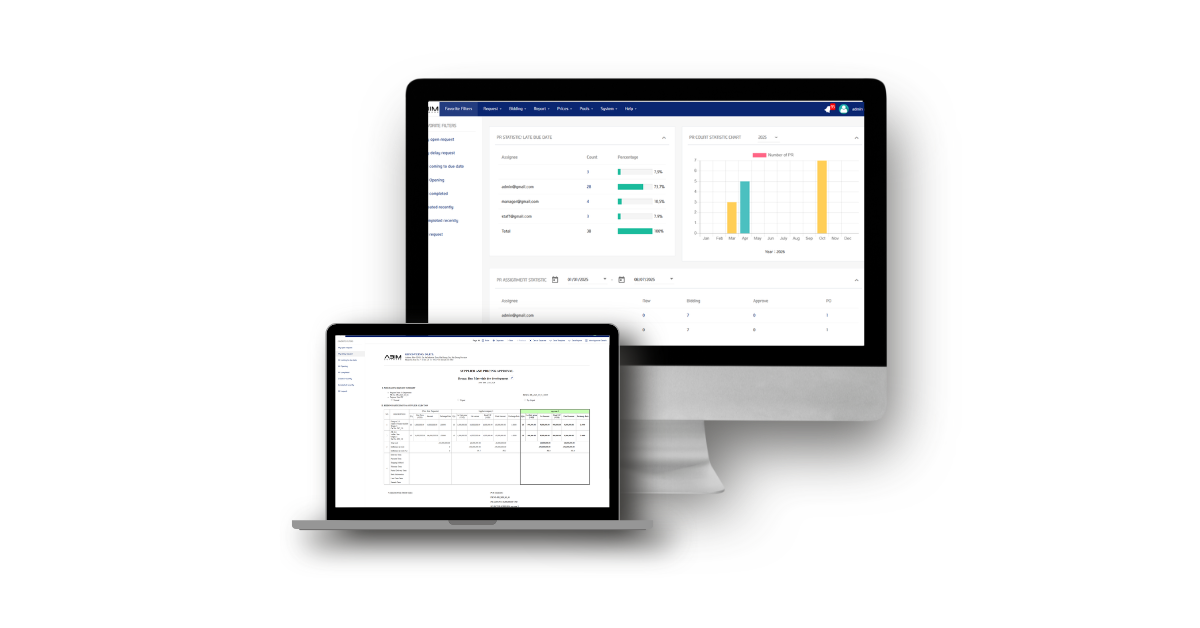
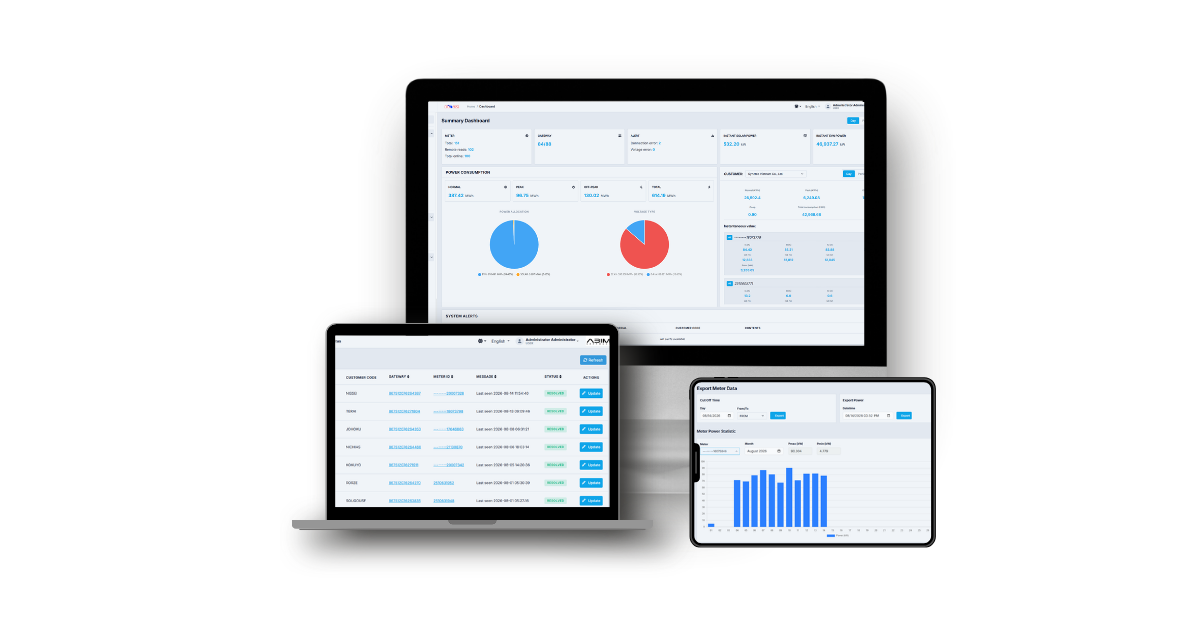
ABIM’s dedicated teams go beyond writing code. Our engineers have built AI image and video processing, real-time IoT energy monitoring, and enterprise procurement platforms, so they bring product and domain thinking to your roadmap. Clients highlight rapid support, continuous workflow improvements, and optimized cost.
[ABIM: add proof points such as team size, retention rate, years in operation, and a named case study. Validate regional cost and time zone rows against a current market report.]
Advantages and Trade-offs of a Dedicated Development Team in Vietnam
Vietnam is on UTC+7. That gives full overlap with Singapore, a 2 hour difference with Japan and Korea, 3 to 4 hours with eastern Australia, and a Vietnamese afternoon that matches a European morning.
Advantages:
- Competitive cost. Rates are well below US and Western European levels for comparable seniority.
- Young, technical workforce. Universities produce a steady pipeline of engineering graduates each year.
- Strong work ethic and stability. Vietnamese engineering teams are known for commitment to long-term engagements. [ABIM: support with a client quote or retention data.]
Trade-offs, and how ABIM handles them:
- English fluency varies. [ABIM: describe how team leads and PMs handle client communication.]
- Tết (Lunar New Year) holiday. Most teams take one to two weeks off in January or February. Plan releases around it and agree on on-call coverage early.
- Limited US overlap. US clients should plan for async-first communication and a short early-morning or late-evening sync window.
ABIM Software is a custom software development company in Hanoi, Vietnam. We build dedicated development teams for companies that need reliable, long-term engineering capacity across web, AI, IoT, and enterprise software.
How to Hire a Dedicated Development Team in 5 Steps
Direct answer: To hire a dedicated development team: 1) define goals, skills, and budget; 2) shortlist vendors by expertise and reviews; 3) evaluate retention, delivery process, and security; 4) interview the proposed engineers; 5) sign a contract covering IP, notice periods, and replacements, then start with a pilot phase.
Step 1. Define Goals and Requirements for Your Dedicated Development Team
- Write down the business outcome first, such as “launch the AI search feature by Q2”, not only the features.
- List required skills, seniority, and team size. High-level requirements are enough to start.
- Name the internal person who will own product decisions.
Step 2. Shortlist Dedicated Development Team Vendors
- Search review platforms such as Clutch and GoodFirms, and ask your network for referrals.
- Filter by location, relevant tech stack, and experience in your industry.
- Aim for a shortlist of 3 to 5 vendors.
Step 3. Evaluate Vendors with a Scorecard (and Watch for Red Flags)
Score each vendor on the same criteria:
| Criterion | What to ask |
| Technical depth | Can you show similar projects and code samples? |
| Retention | What is your annual engineer retention rate? |
| Delivery process | How do you plan sprints, report progress, and handle risks? |
| Security | Which security standards do you follow? How do you control access? |
| References | Can we speak with two current clients? |
Red flags: the vendor won’t let you interview engineers, can’t share retention data, is vague about IP ownership, or uses unnamed subcontractors.
Step 4. Interview Your Dedicated Developers
- Interview each proposed engineer, at least the leads, for both technical skills and communication.
- Use a short, practical task that reflects your real work.
- Confirm English level and comfort with your tools and time zone.
Step 5. Sign a Dedicated Development Team Contract and Start a Pilot
Make sure the contract covers:
- IP assignment to you from the first commit, plus an NDA.
- Notice periods for scaling up, scaling down, and ending the engagement.
- Replacement guarantee, including how fast a departing engineer is replaced.
- Exit and knowledge handover, including documentation and code access.
- Build-operate-transfer (BOT) option if you may want to move the team in-house later.
Start with a pilot of 1 to 3 months. It lets both sides validate fit before scaling.
How to Manage a Dedicated Development Team Effectively
Direct answer: Manage a dedicated development team by assigning clear ownership of product decisions, agreeing on 2 to 4 hours of daily overlap, running shared sprint rituals, documenting decisions in writing, and tracking outcome metrics such as deployment frequency, lead time, and defect rates rather than hours logged.
Communication Best Practices for a Remote Dedicated Development Team
- Treat the team as part of your company. Share the product vision, customer feedback, and roadmap, not just tickets.
- Keep a predictable cadence. Daily standups, sprint planning, demos, and retrospectives in the shared overlap window.
- Write things down. Documented decisions and clear tickets reduce the need for live calls across time zones.
- Agree on an escalation path. Everyone should know who to contact when something blocks delivery.
KPIs to Measure Dedicated Development Team Performance
Hours logged and tickets closed say little about real progress. Track outcomes instead:
| KPI | What it tells you |
| Deployment frequency | How often the team ships working software |
| Lead time for changes | How fast an idea reaches production |
| Change failure rate | How often releases cause problems |
| Time to restore service | How fast the team recovers from incidents |
| Escaped defects | How many bugs reach users |
| Roadmap predictability | Share of planned sprint goals actually delivered |
| Team retention | Whether product knowledge is staying in the team |
The first four are the DORA metrics, a widely used standard for software delivery performance. Review these KPIs monthly and in a quarterly business review with your vendor.
FAQs About Dedicated Development Teams
What is the difference between a dedicated team and staff augmentation?
Staff augmentation adds individual engineers to your existing team, and your leaders manage them directly. A dedicated development team is a self-sufficient unit with its own delivery lead, QA, and process, managed operationally by the vendor while you direct the product.
Is a dedicated development team suitable for startups?
Yes, especially after the prototype stage. Startups use dedicated teams to build an MVP and scale quickly without long hiring cycles. The key requirement is a founder or product owner who can set priorities every sprint.
Can a dedicated development team build AI or machine learning products?
Yes, if the vendor has proven AI/ML experience. A dedicated AI team typically includes ML engineers, a data engineer, backend developers, and MLOps support. Ask for AI project examples and data security practices before signing.
How many people are in a dedicated development team?
Most dedicated development teams have 4 to 12 members. An MVP team usually starts with 4 to 6 people, while scale-up and enterprise teams often grow to 8 to 15.
How long does it take to set up a dedicated development team?
Most vendors can assemble a core dedicated development team within 2 to 6 weeks. The timeline depends on team size, seniority, and how quickly you complete interviews. [ABIM: confirm your typical setup time.]
Who owns the code and IP?
You should. A standard contract assigns all intellectual property to the client from the first line of code, backed by an NDA. Never sign a contract that leaves IP ownership unclear.
What happens if a dedicated developer leaves the team?
The vendor replaces them, usually within an agreed period set in the contract. Good vendors reduce the impact with documentation, code reviews, and overlapping handovers. [ABIM: insert your replacement guarantee.]
Can I scale my dedicated development team up or down?
Yes. Most contracts allow you to add or remove team members with a notice period, often one month. Agree on these terms before you sign.
What are the time zone differences when working with a team in Vietnam?
Vietnam is on UTC+7. There is no time difference with Singapore, 2 hours with Japan and Korea, 3 to 4 hours with eastern Australia, and 5 to 6 hours with Central Europe. US teams usually work async with a short daily overlap.
Can I move my dedicated development team in-house later?
Yes, through a build-operate-transfer (BOT) arrangement. The vendor builds and runs the team, then transfers it to your own entity on agreed terms. Include this option in your contract early if you think you may need it.
Is a Dedicated Development Team Right for Your Business?
Direct answer: A dedicated development team is right for your business if you are building a long-term product, need to scale engineering quickly, and have someone internally to own product direction. It gives you continuity and speed without permanent headcount. For fixed-scope or short projects, a project-based model is usually more cost-effective.
A dedicated development team is not simply cheaper developers. It is a way to buy speed, scarce skills, and product continuity while your leadership stays focused on strategy. The benefits are real, and so are the challenges. Clear ownership, strong contracts, and a partner with proven retention make the difference.
If you are considering a dedicated development team in Vietnam, ABIM Software can help you design the right team structure for your roadmap. Book a free consultation or explore our software development services and AI solutions.